Your chimney takes the worst of Michigan weather.
- Stops water intrusion before it reaches the roof
- Restores structural stability up top
- Brick and mortar matched to your existing chimney
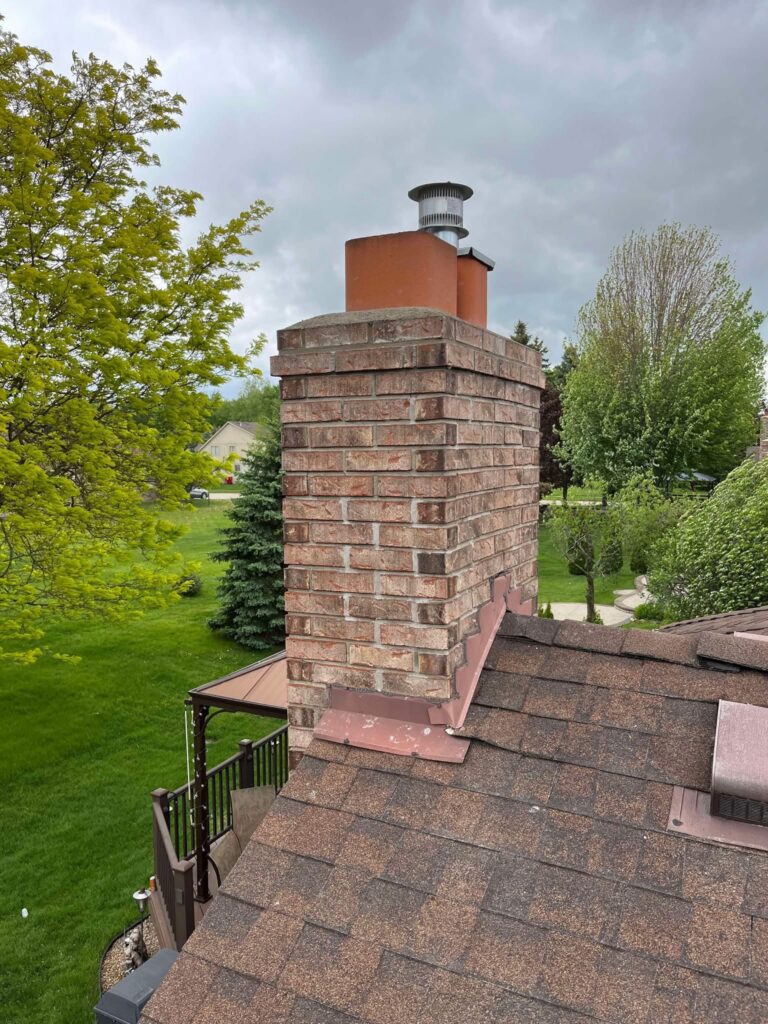
Is your chimney trying to tell you something?
Cracked or Crumbling Crown
The concrete cap on top is your first line of defense. Once it cracks, water pours straight into the chimney structure.
Spalling or Flaking Brick
When trapped moisture freezes, brick faces pop, flake, and crumble away — a clear freeze-thaw warning.
Failing Mortar Joints
Receding, hairline, or missing mortar lets water track deep into the chimney and behind the brick.
White Staining (Efflorescence)
Chalky white residue means water is actively moving through your masonry.
Rusted or Lifting Flashing
Where the chimney meets the roof is a top leak point. Rusted or pulled-away flashing sends water inside.
Leaks or Water Stains Inside
Damp ceilings, stained drywall, or a musty smell near the chimney trace back to failing masonry above.
A proven five-step process.
Inspect & Assess
Remove Damaged Material
Rebuild & Repoint
Crown, Cap & Flashing
Waterproof & Finish
More than cosmetic. It is protection.
Stops Water Intrusion
Seals out the moisture that drives nearly every chimney failure.
Restores Structural Stability
Re-bonds and rebuilds the chimney into one solid, plumb structure.
Boosts Curb Appeal
Crisp brick and clean joints make the whole roofline look new again.
Safer Venting
A sound crown, cap, and flue keep the chimney doing its job correctly.
Protects Your Roof & Ceilings
Stops leaks before they reach framing, attic, and drywall.
Protects Home Value
A solid chimney is a major plus for inspections and resale.
Recent chimney work.


Chimney repair questions, answered.
It depends on how far the damage goes. Surface issues like worn joints or a cracked crown are usually a targeted repair. Once spalling and water damage reach deep into the structure or the chimney starts to lean, a partial or full rebuild is the lasting fix. We’ll tell you straight which one you need.
The crown is the sloped concrete slab on top of the chimney that sheds water away from the brick and flue. Michigan’s freeze-thaw cycles work it hard, and once it cracks, water gets into the structure fast — making the crown one of the most important things to keep sound.
Most chimney leaks trace back to a cracked crown, failing mortar joints, spalled brick, a missing cap, or rusted flashing where the chimney meets the roof. We find the actual source rather than just patching the symptom.
Yes. We source brick to match as closely as possible and custom-mix mortar to your existing color and joint profile so the repair blends into the original chimney.
Most repairs are completed in one to three days depending on scope. A full rebuild takes longer. We’ll give you a clear timeline with your estimate.
For most brick chimneys, yes. A breathable masonry sealer keeps water out while letting trapped moisture escape — a low-cost step that adds years of life, especially through our winters.
A quick look once a year and after any major storm is smart. Catching a small crack early is far cheaper than rebuilding after years of water damage.